Most people first hear about Bitcoin mining and picture a warehouse full of loud machines, huge electric bills, and tech experts speaking a different language. The truth is simpler. This bitcoin mining for beginners guide is for people who want a real starting point – not hype, not jargon, and not another vague promise that leaves you more confused than when you started.
If you’re looking for another income stream, more control over your future, or a path that feels bigger than trading hours for dollars, Bitcoin mining deserves your attention. Not because it’s magic, and not because everyone who starts gets rich overnight. It deserves attention because it sits at the intersection of digital ownership, infrastructure, and long-term opportunity. When you understand the basics, you can finally decide whether it fits your goals.
What Bitcoin mining actually is
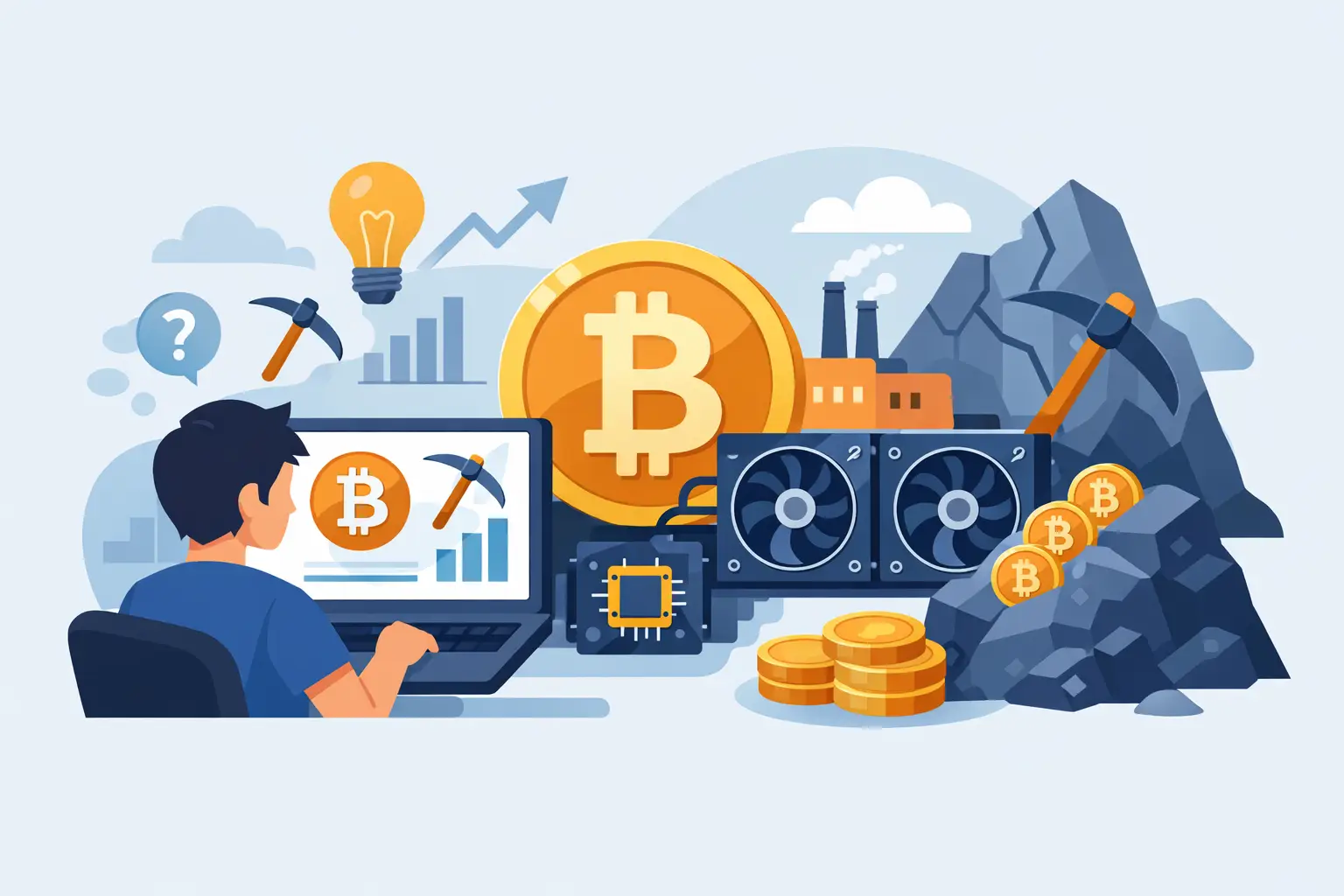
Bitcoin mining is the process of using specialized computers to validate transactions on the Bitcoin network. In return, miners can earn Bitcoin. That is the simple version.
Under the hood, miners compete to solve mathematical problems. The machine that helps confirm the next block gets the reward. This is what keeps the network secure and decentralized. No bank is running Bitcoin. No company controls the ledger. Miners around the world help maintain it.
For a beginner, the key point is this: mining is not the same as buying Bitcoin. When you buy Bitcoin, you are purchasing an asset directly. When you mine Bitcoin, you are participating in the system that produces and secures that asset. That difference matters because mining has operating costs, setup choices, and profit variables that can work for you or against you.
Why this bitcoin mining for beginners guide matters now
A lot of people are waking up to the same reality. One paycheck often is not enough. Traditional paths to financial security feel slower, tighter, and less reliable than they used to. People want alternatives that can grow beyond the limits of a job.
Bitcoin mining attracts attention because it feels tangible. You are not staring at charts all day hoping to time the market. You are backing infrastructure. You are participating in a system with rules, rewards, and measurable outputs. That appeals to people who want something more grounded than speculation alone.
That said, mining is still a business decision. It depends on your budget, your risk tolerance, your electricity cost, and how patient you are. The people who do best usually approach it with clear expectations, not fantasy.
The three things beginners need to understand first
Before you spend a dollar, understand the relationship between hardware, electricity, and Bitcoin price. These three factors shape almost everything.
Hardware is the machine doing the work. For Bitcoin, that usually means ASIC miners, which are devices built specifically for mining. Your laptop will not cut it. General computers are far too weak to compete.
Electricity is the ongoing cost that can make a mining setup profitable or painful. Cheap power can create room for earnings. Expensive power can wipe out them out quickly. This is why two people using the same machine can have completely different results.
Bitcoin price affects the value of what you earn. If the price rises, your mined Bitcoin may become more valuable. If it falls, your revenue can shrink while your costs stay the same. That is one of the main trade-offs in mining.
What you need to start mining Bitcoin
If you want to mine on your own, you need the right machine, a place to run it, internet access, and a wallet to receive Bitcoin. You will also need a mining pool in most cases, since solo mining is unrealistic for most beginners.
A mining pool allows many miners to combine computing power and share rewards. Instead of waiting forever for a tiny chance at a full block reward, you earn smaller, steadier payouts based on your contribution. For beginners, this is usually the more practical route.
You should also think seriously about noise, heat, and ventilation. ASIC miners are not quiet. They run hot and can be disruptive in a home setting. This is where a lot of newcomers get surprised. The machine itself may look simple, but the environment around it matters just as much.
Can beginners mine without owning hardware?
Yes, but this is where you need to slow down and think clearly. Some people enter Bitcoin mining through hosted setups, managed mining programs, or guided opportunities where the technical side is simplified. That can lower the barrier to entry, especially if you do not want to deal with machine setup, repairs, and facility issues.
The advantage is convenience. The trade-off is control. When you do not personally run the hardware, you need to trust the operator, understand the fee structure, and know exactly how payouts work. There are legitimate models out there, and there are also offers that sound good until you ask basic questions.
A beginner should never move forward without understanding where the mining happens, how earnings are calculated, what the ongoing costs are, and how withdrawals work. If someone cannot explain that in plain language, keep your wallet closed.
How much does Bitcoin mining cost?
This depends on how you enter. If you buy your own hardware, your upfront cost can range from hundreds to several thousand dollars per machine, plus power supply, cooling, and possible electrical upgrades. Then you have monthly electricity costs and maintenance.
If you start through a guided platform or mining opportunity, the structure may be different. Instead of building everything from scratch, you may be paying for access, capacity, contracts, or participation in a system that handles the backend. That can feel easier, especially for someone who wants a simpler path, but you still need to understand what you are paying for.
The real beginner mistake is not overspending. It is starting without a plan. You should know your timeline, your budget, and what level of risk you are comfortable with. Mining can reward patience, but it punishes guesswork.
How Bitcoin miners make money
Miners earn from Bitcoin rewards and, in some cases, transaction fees included in blocks. In practice, what lands in your pocket depends on your machine efficiency, mining difficulty, pool fees, hosting or electricity costs, and the market price of Bitcoin.
This is why mining conversations can get messy fast. One person talks about revenue. Another talks about profit. Those are not the same thing. A machine can produce Bitcoin every day and still leave very little after expenses. On the other hand, a setup that looks average during a weak market can become far more attractive if Bitcoin rises and your costs stay controlled.
Mining is often stronger as a long-term strategy than a quick cash strategy. People who understand that tend to make better decisions.
Risks beginners should take seriously
There is no honest bitcoin mining for beginners guide without talking about risk. The first risk is volatility. Bitcoin can move fast, and those moves affect your returns.
The second risk is bad setup decisions. Buying the wrong machine, paying too much for power, or joining the wrong program can turn a promising idea into frustration.
The third risk is expectation. If you enter mining thinking it will instantly replace your full-time income, you are setting yourself up for disappointment. Some people do build serious results over time, but that usually comes from patience, smart positioning, and guidance.
There is also the risk of complexity. Beginners often quit not because mining is impossible, but because no one explained it in a way that made sense. That is why support matters.
Is Bitcoin mining still worth it for beginners?
For the right person, yes. Especially if you are looking for a long-term digital asset strategy and you like the idea of participating in infrastructure rather than just buying and hoping. But worth it does not mean effortless.
It is worth it when your entry point matches your experience level. It is worth it when you understand the numbers. It is worth it when you have realistic expectations and a clear reason for doing it. If your goal is more freedom, more options, and a stronger position in the digital economy, mining can be part of that picture.
For many people, the smartest move is not trying to become a technical expert overnight. It is starting with a simple framework, asking better questions, and getting around people who already understand the path. That is often how momentum begins.
The best way to start without getting overwhelmed
Start small enough that you can think clearly. Learn the basic economics. Understand how rewards are earned. Compare self-managed mining with guided options. Ask what happens in a strong market and a weak one. Ask where the machines are, who manages them, and how you get paid.
Most important, choose a path you can stick with. A lot of people sabotage themselves by chasing speed instead of sustainability. Bitcoin mining is not about one emotional decision. It is about putting yourself in position, step by step, so your effort today can create more freedom tomorrow.
If you want a simpler entry into this world, education and guidance can save you time, money, and frustration. That is one reason platforms like BTC Strateg focus on helping people understand the opportunity in plain English before they make a move.
You do not need to know everything to begin. You just need enough clarity to make your first smart decision, and enough belief in your future to stop sitting on the sidelines.