Most people do not have an income problem. They have a leverage problem. They work, they get paid, and when they stop, the money slows down or stops completely. That is why passive income vs active income matters so much if your goal is more freedom, more control, and less pressure tied to every hour of your day.
If you feel stuck trading time for money, you are not lazy and you are not behind. You are simply inside a model that rewards effort in the short term but rarely builds long-term breathing room. Once you understand the difference between active and passive income, you start seeing why some people stay trapped in survival mode while others create momentum that keeps paying them.
What passive income vs active income really means
Active income is the money you earn by directly working. You show up, sell your time, provide a service, close a deal, or complete a task, and then you get paid. A salary, hourly wage, freelance project, consulting fee, and most commission jobs fall into this category.
Passive income is different. It is income that continues to come in after the initial setup, even when you are not constantly working for every dollar. That does not mean zero work. It means the work is front-loaded, system-based, or asset-based rather than tied to your daily presence.
This is where many people get confused. Passive income is not magic money. It usually takes money, skill, time, patience, or a combination of all four. The real difference is not effort versus no effort. The real difference is direct labor versus leveraged systems.
Why active income feels safe but keeps many people stuck
Active income is familiar. It gives structure, predictable paychecks, and a clear exchange. Work equals money. For most people, that feels safer than building something uncertain.
The problem shows up when life hits. If you get sick, burned out, laid off, or simply want more time with your family, active income can become fragile fast. Your earning power depends on your availability. Even high earners can feel broke in a different way because their income still depends on being switched on all the time.
There is nothing wrong with active income. In fact, it is often the first step to building capital. It pays bills, funds your next move, and gives you room to learn. But if all your income is active income, you are always one interruption away from financial stress.
Why passive income attracts ambitious people
Passive income attracts people who want more than survival. They want flexibility. They want a path where effort today can keep producing later. They want to stop rebuilding from zero every month.
That is the emotional power behind passive income. It is not just about money. It is about ownership. It is about waking up with income sources that do not depend entirely on your mood, schedule, or physical energy that day.
For people exploring crypto, digital business, and alternative wealth models, this matters even more. The old script says work harder. The smarter script says build assets, systems, and positions that can scale beyond your own hours.
Passive income vs active income in real life
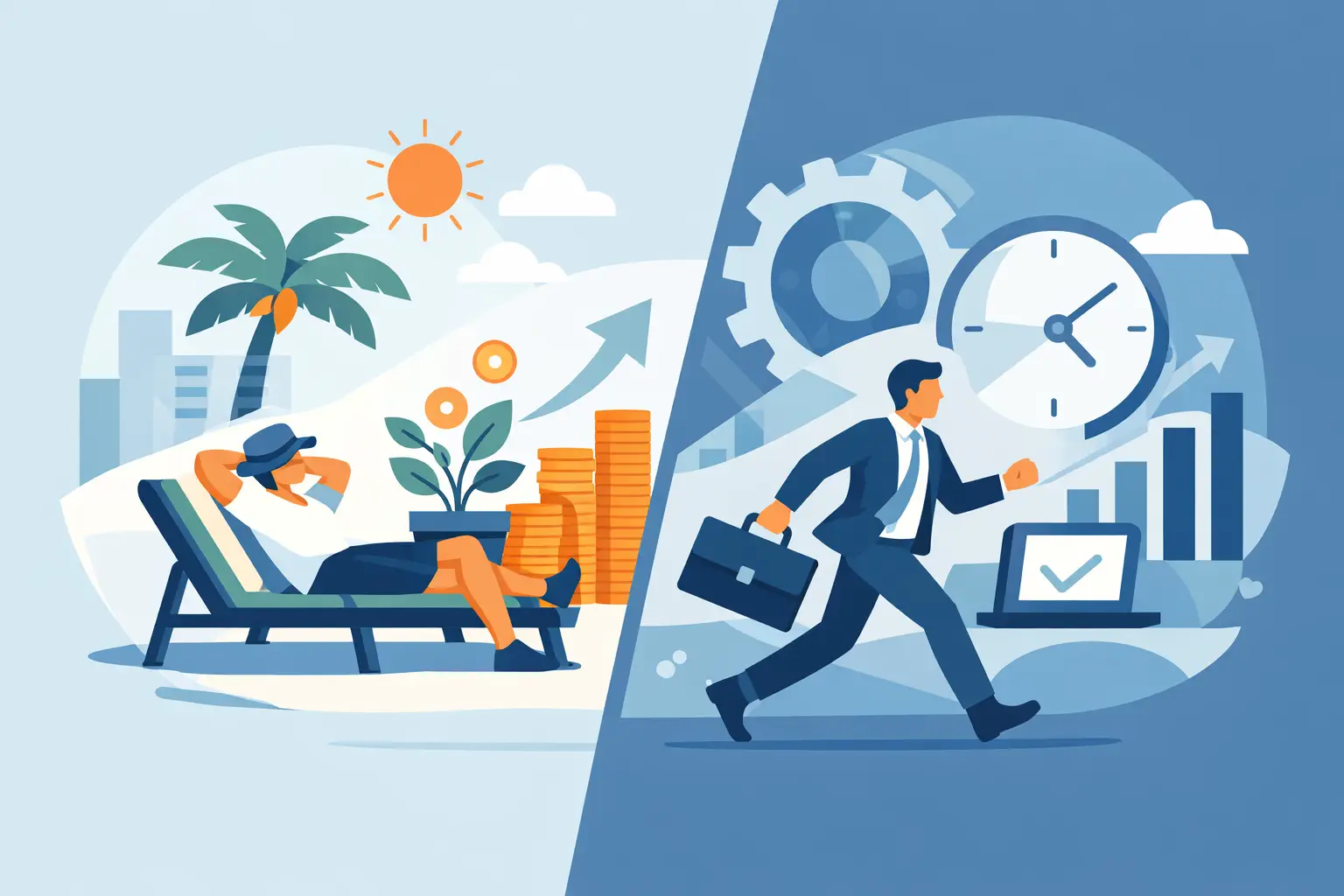
Here is the simplest way to think about it. If you stop working today, active income usually stops with you. Passive income may continue because it is tied to an asset, platform, network, or system already in motion.
A full-time job is active income. Freelancing is active income. Driving for delivery apps is active income. Coaching clients one by one is mostly active income.
Rental cash flow, royalties, dividends, content monetization, automated digital sales, and some forms of crypto mining can fall into the passive side. Again, none of these are fully effortless. They just have more leverage built in.
This is why passive income vs active income is not an academic debate. It shapes your time, your stress level, and your future options.
Where crypto mining fits in the conversation
Crypto mining gets attention because it speaks directly to the passive income idea. Instead of earning only when you personally work, mining can generate returns through infrastructure and network participation. In plain English, you set up or join a mining model, and the system does the production work while you monitor performance and manage risk.
That said, crypto mining is not a guaranteed paycheck. It depends on factors like market conditions, setup quality, electricity costs, platform reliability, and how the opportunity is structured. Anyone who tells you it is effortless or risk-free is selling fantasy.
But for people who want exposure to a different income model, mining is attractive because it moves away from pure time-for-money economics. It introduces the idea that income can be generated from digital assets and decentralized systems rather than only from a boss, a shift schedule, or a stack of client calls.
For many beginners, the biggest value is not just the potential earnings. It is the mindset shift. You start asking better questions. How do I make my money work harder than my hours? How do I build something that can continue producing after the setup phase? That shift can change everything.
The trade-offs most articles leave out
Passive income sounds better, but it comes with its own challenges. Usually, you wait longer for results. You may need startup capital. You need to learn new skills, evaluate opportunities, and avoid hype. Some passive income models are truly scalable. Others are only semi-passive and still need regular maintenance.
Active income has strengths passive income does not. It is often faster to start. It can be more predictable at the beginning. You usually know what you need to do to get paid.
So this is not about declaring one good and one bad. It is about understanding the role each one plays. Active income gives you cash flow now. Passive income gives you the chance to build freedom later. The smartest people use active income to create passive income.
How to move from active income toward passive income
The biggest mistake is trying to escape active income overnight. That pressure leads people into bad decisions, unrealistic expectations, and desperation.
A stronger move is to use your current income as fuel. Keep your cash flow stable while you start building one leveraged stream at a time. That might mean learning a crypto model you actually understand, setting aside capital consistently, or joining an opportunity where the onboarding is simple and the support is personal.
Start with clarity. You need to know your risk tolerance, your budget, and how much time you can commit upfront. If you do not understand how an income model works, do not put money into it. Simplicity matters. So does guidance.
This is one reason relationship-driven education works well in the crypto space. People do not just need information. They need someone who can explain the model in plain English, help them avoid rookie mistakes, and show them what realistic expectations look like. That support can shorten the learning curve and build confidence faster.
Which one should you focus on right now?
If your bills are unstable, focus first on strengthening active income. Cash flow gives you options. It lowers emotional pressure and helps you make better long-term decisions.
If your active income is stable but capped, start shifting attention toward passive income opportunities with real structure behind them. Look for models that are understandable, repeatable, and aligned with where the digital economy is heading.
If you are already earning well but feel chained to your schedule, passive income deserves serious attention. At that stage, the issue is no longer just money. It is freedom.
That is the real point. Passive income vs active income is not just about definitions. It is about deciding what kind of life you are building. Do you want all your income tied to your daily effort, or do you want part of your future supported by systems that keep moving even when you step back?
The answer does not need to be extreme. You do not have to quit your job tomorrow or bet everything on one opportunity. You just need to stop thinking like earned income is the only path available to you. In a world shaped by digital assets, online networks, and new financial models, there are more ways than ever to build leverage if you are willing to learn and move.
If you have been looking for a sign to start thinking bigger about income, this is it. Earn what you need today, but build what can free you tomorrow.