Most people first hear about Bitcoin mining and picture easy money, laptops printing cash, or some mysterious tech reserved for insiders. The truth is better and harder at the same time. This beginner guide to bitcoin mining is here to give you a straight answer – what mining is, how it works, what it can realistically do for you, and where beginners often get it wrong.
If you are tired of trading time for money and looking for a way to participate in the digital economy, mining can be worth your attention. But only if you understand the model. Bitcoin mining is not magic, and it is not a shortcut. It is a system built on computing power, energy, patience, and smart positioning.
Beginner guide to bitcoin mining: what it really means
At its core, Bitcoin mining is the process of using specialized computers to validate transactions on the Bitcoin network. In return, miners earn bitcoin when their machines help secure the blockchain and solve the required cryptographic work.
That technical definition matters, but what matters more for a beginner is this: mining is how new bitcoin enters circulation, and it is also one of the few ways to earn exposure to Bitcoin without simply buying and holding it. Instead of purchasing coins outright, you are participating in the infrastructure behind the network.
That is why mining attracts people who want more control. It feels active rather than passive. You are not just watching a chart and hoping. You are building a position in a system that runs 24/7.
Still, expectations need to stay grounded. Mining income depends on hardware efficiency, electricity costs, Bitcoin price, mining difficulty, and the setup you choose. The opportunity is real, but the results are never one-size-fits-all.
How bitcoin mining works for beginners
The Bitcoin network processes transactions in blocks. Miners compete to solve a mathematical puzzle tied to each block. The first one to solve it earns the block reward plus transaction fees.
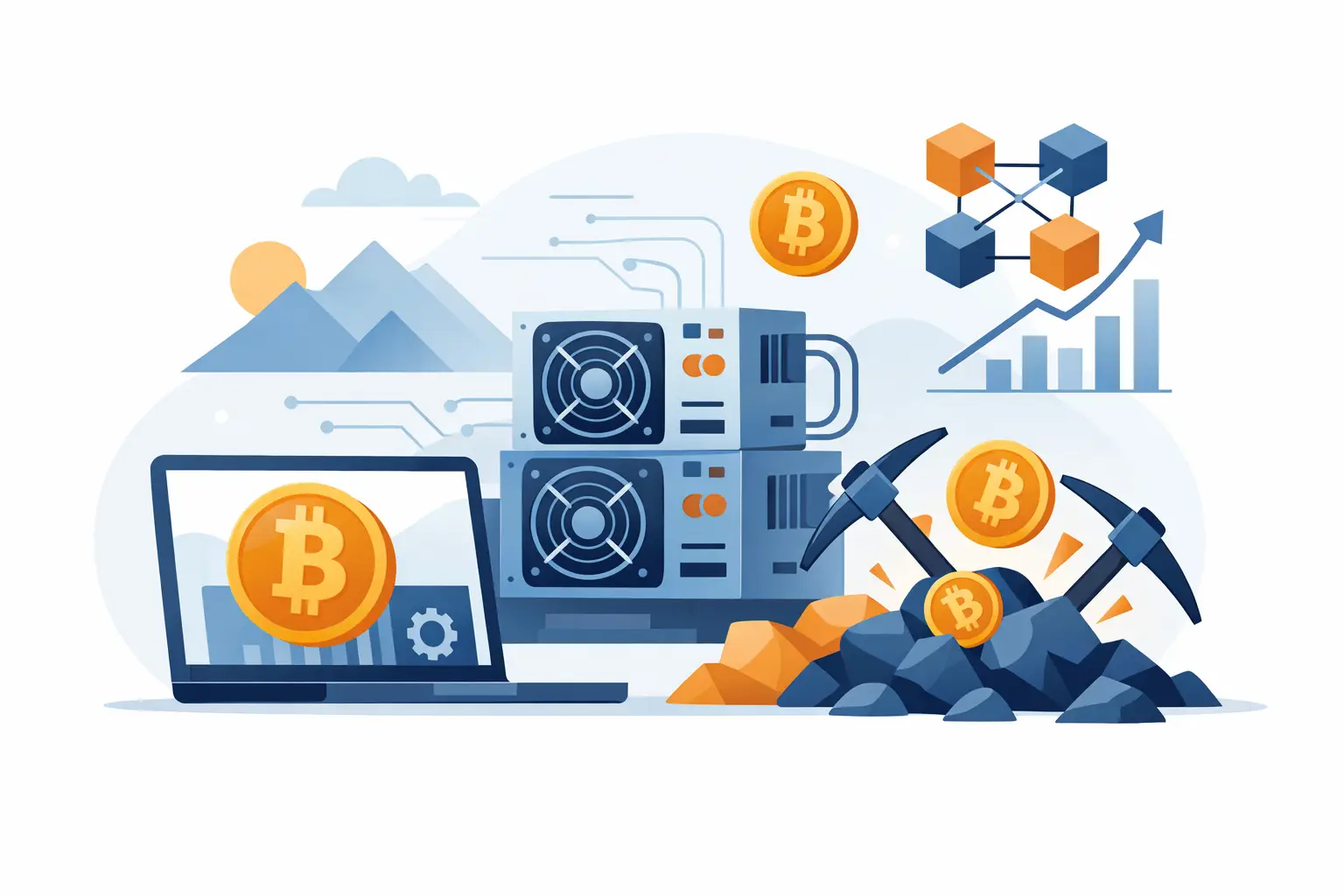
Years ago, people could mine Bitcoin from home with standard computers. That is no longer practical. Today, serious mining is done with ASICs, which are machines built specifically for Bitcoin mining. They are fast, powerful, and far more efficient than a laptop or gaming PC.
This is where many beginners lose money – they enter with outdated assumptions. They think any machine can mine profitably. It cannot. If you want a realistic path, you need to understand the difference between hobby mining and income-focused mining.
Hobby mining may teach you the basics. Income-focused mining is about efficiency, power costs, machine uptime, and a strategy that can survive market swings.
What you need to start
A true beginner guide to bitcoin mining should make one thing clear: your entry point depends on your resources, your risk tolerance, and your goals.
If you want to mine directly, you need an ASIC miner, access to affordable electricity, a stable internet connection, a mining pool account, and a place where heat and noise will not become a problem. ASICs are loud. They run hot. They are not something most people want sitting next to the kitchen table.
Then there is the cost question. Hardware can be expensive, and cheap machines are often cheap for a reason – lower efficiency, older specs, or reduced profitability. Electricity is the make-or-break factor. A machine that looks profitable on paper can become a losing setup if your utility bill is too high.
This is why beginners should not rush into buying hardware just because they feel urgency. Crypto rewards people who move with conviction, but not people who move blindly.
The three common ways beginners enter mining
Most beginners start in one of three ways. They either buy and run their own machine, join a hosted mining setup, or enter through a mining-focused opportunity where onboarding and guidance are part of the process.
Running your own miner gives you direct control, but it also gives you full responsibility. You handle setup, maintenance, ventilation, noise, downtime, and electricity management. For some people, that control is empowering. For others, it becomes one more stressful job.
Hosted mining can remove some of that friction. In that model, your machine is placed in a facility better suited for mining operations. That can make sense if power rates are better and the provider is trustworthy. The trade-off is simple – less hands-on hassle, but more reliance on a third party.
Then there are guided entry models built around education, community, and support. For many beginners, this feels more realistic because it shortens the learning curve. If you are new to crypto, having someone explain the process in plain English can save you from expensive mistakes.
Costs, rewards, and the truth about income
Let us talk about what people really want to know: can you make money?
Yes, but the smarter question is under what conditions. Mining returns are shaped by variables you do not fully control. Bitcoin price can rise, which improves revenue. Mining difficulty can increase, which makes rewards harder to earn. Energy prices can change. Hardware ages. Machines break. Markets cool off.
That does not make mining a bad idea. It just means you need a business mindset, not a fantasy mindset. The people who win over time usually understand that mining is a long game. They think in months and years, not in overnight paydays.
For someone seeking financial freedom, that perspective matters. Mining can be part of a bigger strategy that builds digital assets over time. It may create cash flow in the right setup. It may also give you exposure to Bitcoin accumulation without relying only on market timing. But it is still a real business decision, and real business decisions require numbers.
Before you start, ask yourself what success looks like. Are you trying to generate side income? Build a long-term Bitcoin position? Learn the industry and position yourself early? Those are different goals, and they may lead to different mining choices.
Risks beginners should understand
The biggest beginner mistake is assuming mining is automatically passive. It can become more streamlined over time, but it is not passive on day one. You need to understand your costs, your provider if you use one, your expected timeline, and the possibility that returns fluctuate.
There is also the risk of hype. Crypto attracts big promises. Some offers sound amazing because they are designed to sound amazing. If someone guarantees unrealistic returns with no clear explanation of the model, that is your signal to slow down.
Another risk is starting too big. Beginners sometimes invest more than they can afford because they are excited about changing their life fast. That emotion is understandable, especially if you feel stuck financially. But desperation creates bad decisions. Momentum is powerful when it is paired with clarity.
A smarter way to approach bitcoin mining
If you are serious, start simple. Learn the economics. Understand what drives profitability. Ask hard questions about hardware, hosting, maintenance, payout structure, and timelines. Do not worry about sounding inexperienced. Beginners who ask real questions usually make stronger moves than people pretending to already know everything.
This is also where mentorship matters. The crypto world moves fast, and most people do not need more noise – they need direction. A good guide can help you avoid scams, understand realistic expectations, and move from confusion to action.
That is one reason people are drawn to brands like BTC Strateg. The appeal is not only the mining concept itself. It is the fact that someone simplifies the entry process and gives direct support. For a beginner trying to break out of the traditional income trap, that kind of guidance can make the difference between hesitation and progress.
Is bitcoin mining right for you?
Bitcoin mining makes the most sense for people who want exposure to a growing digital asset, are open to learning a new model, and can stay patient while building. It is less suitable for people looking for instant guaranteed income or those unwilling to understand the mechanics behind the opportunity.
There is no perfect entry point that fits everyone. For some, buying Bitcoin directly may be simpler. For others, mining feels more aligned because it creates participation, structure, and the possibility of building something that keeps working beyond a single paycheck.
That is the real appeal. Mining is not only about coins. It is about stepping into a new way of thinking about income, ownership, and financial control. If that idea speaks to you, start by getting informed, stay realistic, and make your first move with confidence instead of guesswork.
The people who create a different future usually do not wait until every doubt disappears – they just decide to learn fast, move smart, and keep going.